2027 Wedding Décor Trends: A Toronto Designer's Forecast
A Luxury Designer's Forecast for the 2027 Season
Quick Answer: What Are the 2027 Wedding Décor Trends?
2027 is a pullback year. The defining shift is away from maximalism and toward restraint — fewer elements, chosen more deliberately, executed at a higher standard. In practice that means florals woven into the architecture of a room instead of standalone arches, single-variety installations instead of mixed arrangements, ceremony structures that sit on the ground rather than tower over it, and lighting designed as its own layer rather than an afterthought. Colour moves from 2026's mocha and warm neutrals toward deeper browns and reds, with lilac and soft blue emerging underneath.
One thing to know before you read on: restraint is not the same as cheaper. We'll come back to that.
1. Installations Move Into the Architecture
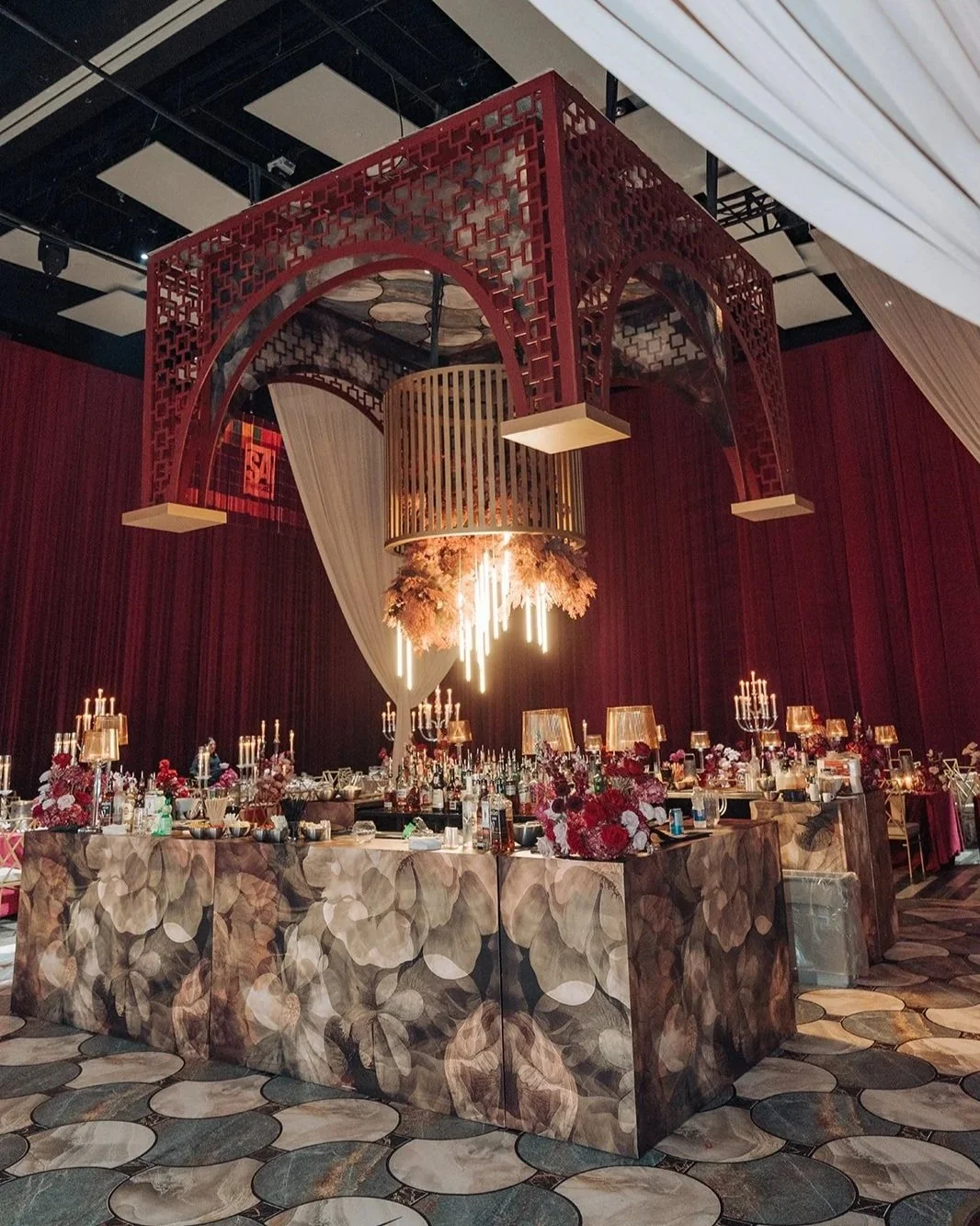
The standalone floral arch is on its way out. What's replacing it is more interesting and much harder to build: florals integrated into the room itself — wrapped around structural beams, climbing a staircase, framing a window, following the line of a balcony.
The reason this works is that it stops reading as decoration placed in a venue and starts reading as the venue itself, transformed. In a heritage room, following the existing architecture is almost always more powerful than fighting it with a freestanding structure.
It is also the trend most dependent on the room. An integrated installation has to be designed for one specific space — you cannot reuse the plan. That's part of why it feels bespoke, and part of why it costs what it costs.
What we'd tell a couple: book a site visit before you commit to a design direction. The building decides this one, not the mood board.
2. Monobloom — One Flower, Done Properly
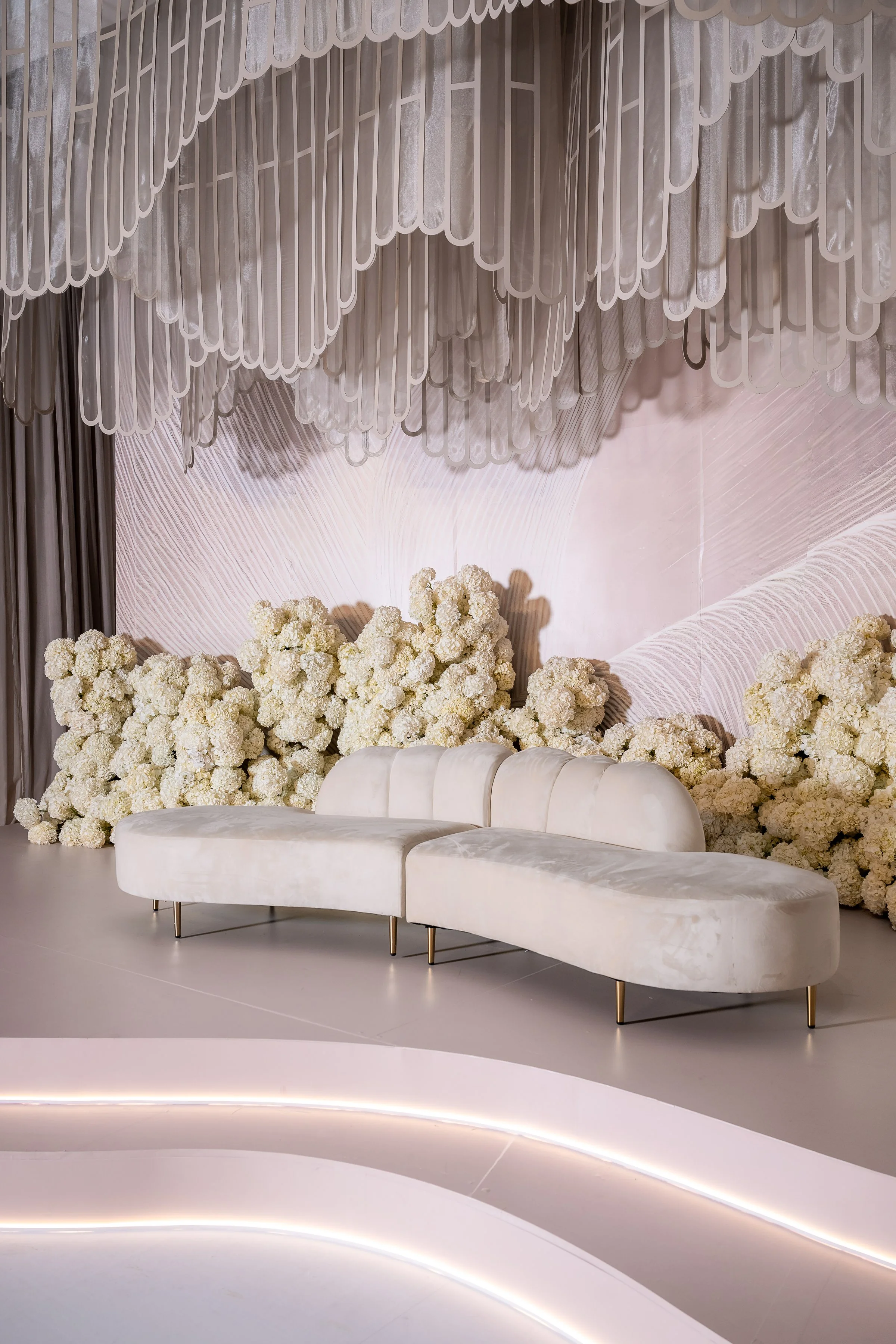
Single-variety florals are everywhere in the 2027 forecasts. An entire ceremony in one bloom. A reception where every table carries the same flower in a different scale.
It photographs beautifully and it reads as confident rather than busy. It is also the most commonly misunderstood trend of the year, because couples assume one variety means one price — simpler, cheaper, fewer decisions.
The opposite is true, and we'll explain why further down.
3. Sunken Meadows and the Excavated Garden
Two related ideas, both about bringing arrangements down rather than up.
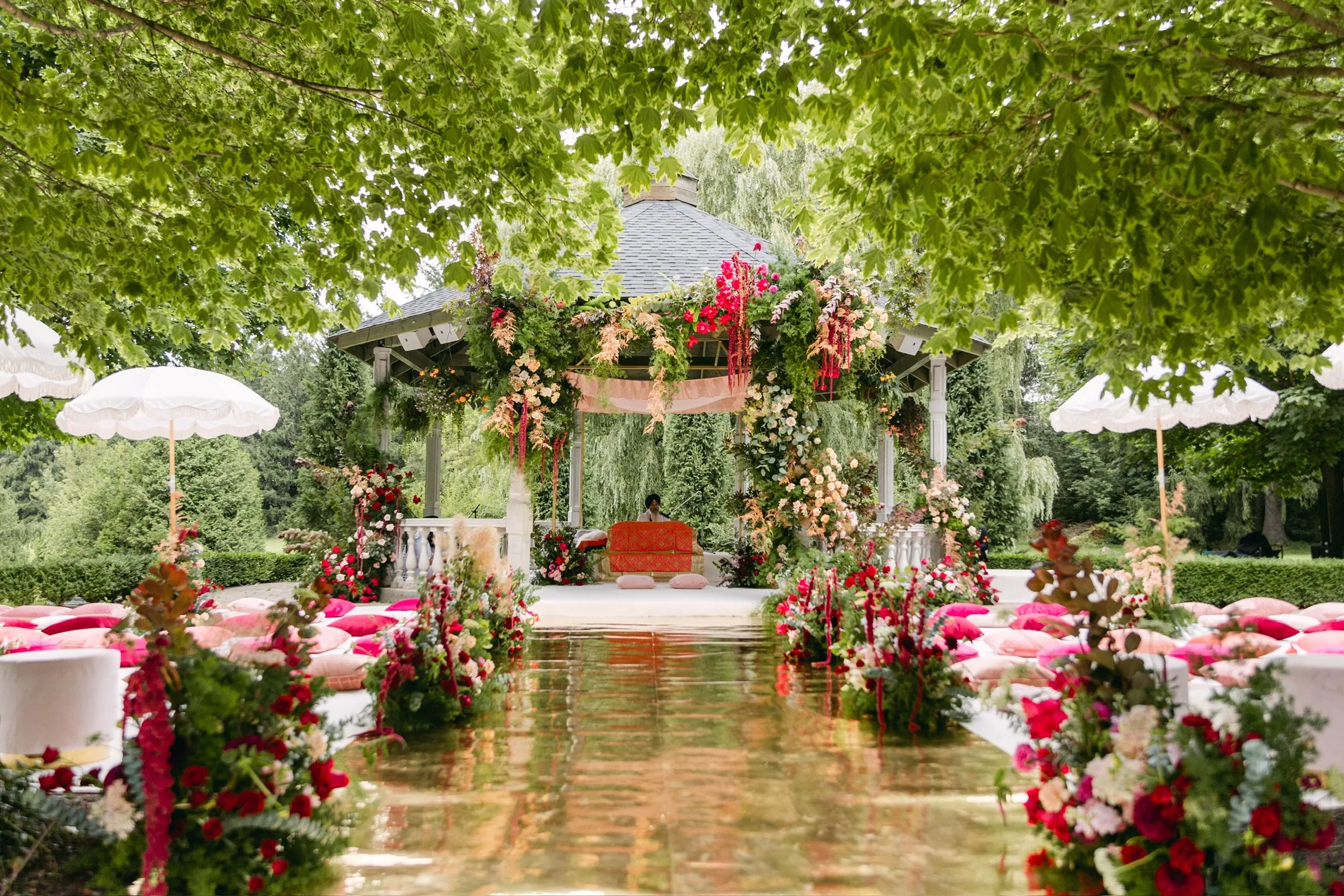
Sunken meadows run low florals along the ground between tables, so guests walk through the design instead of around it. The excavated garden takes it further with soil, moss, root systems and stems that look unearthed rather than arranged — deliberately imperfect, closer to a forest floor than a centrepiece.
Both need real height in the room to work, and both need a floor plan that accounts for guest movement from the start. This is not a treatment you add late.
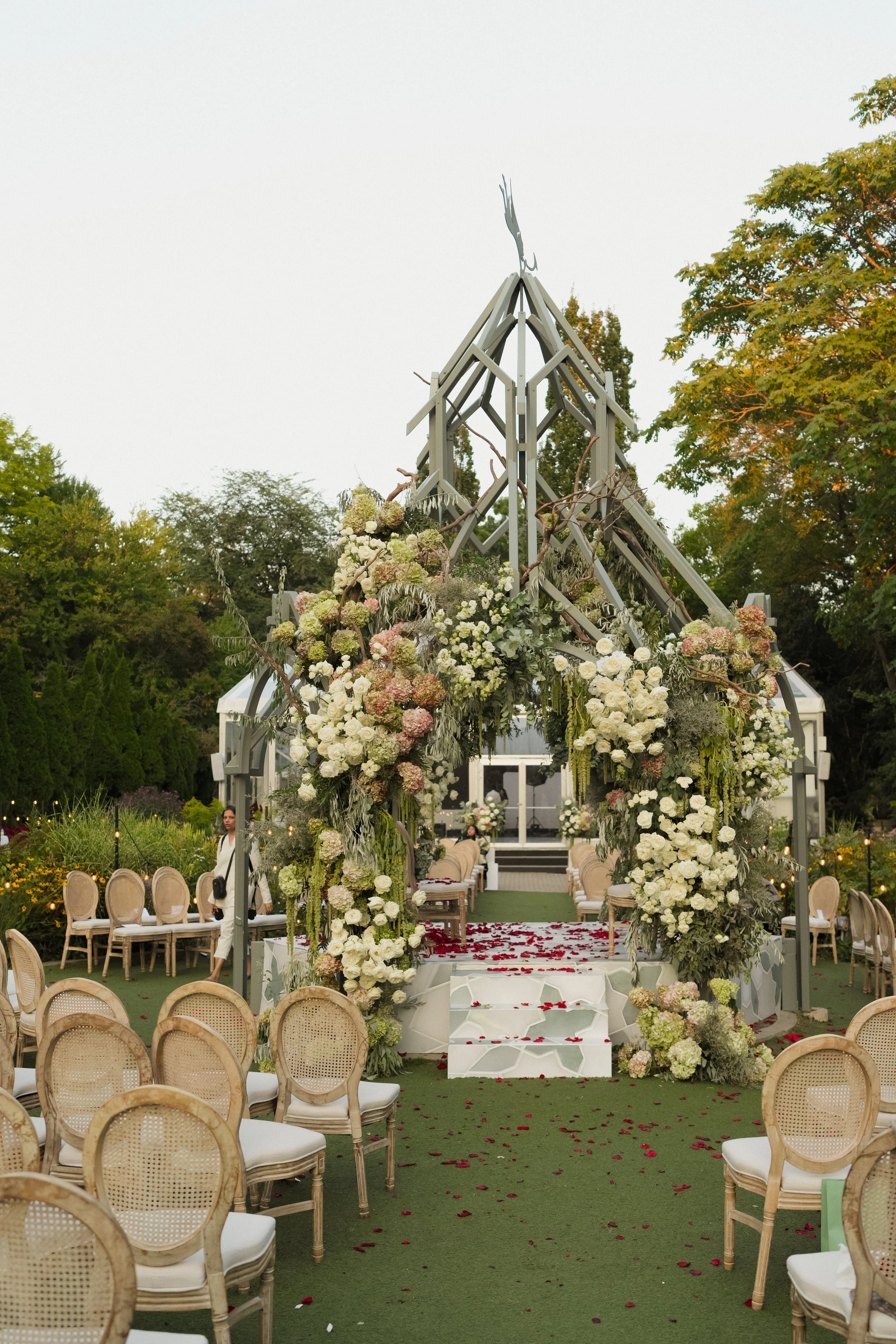
4. Grounded Ceremony Arches
Circular, low, meadow-style ceremony structures are replacing tall arches. The couple stands within the design rather than beneath it.
The practical advantage is sightlines. A grounded structure doesn't compete with the couple in photographs and doesn't block the back of the room. The practical constraint is that it needs a generous ceremony footprint — in a tight room, a vertical structure still wins.
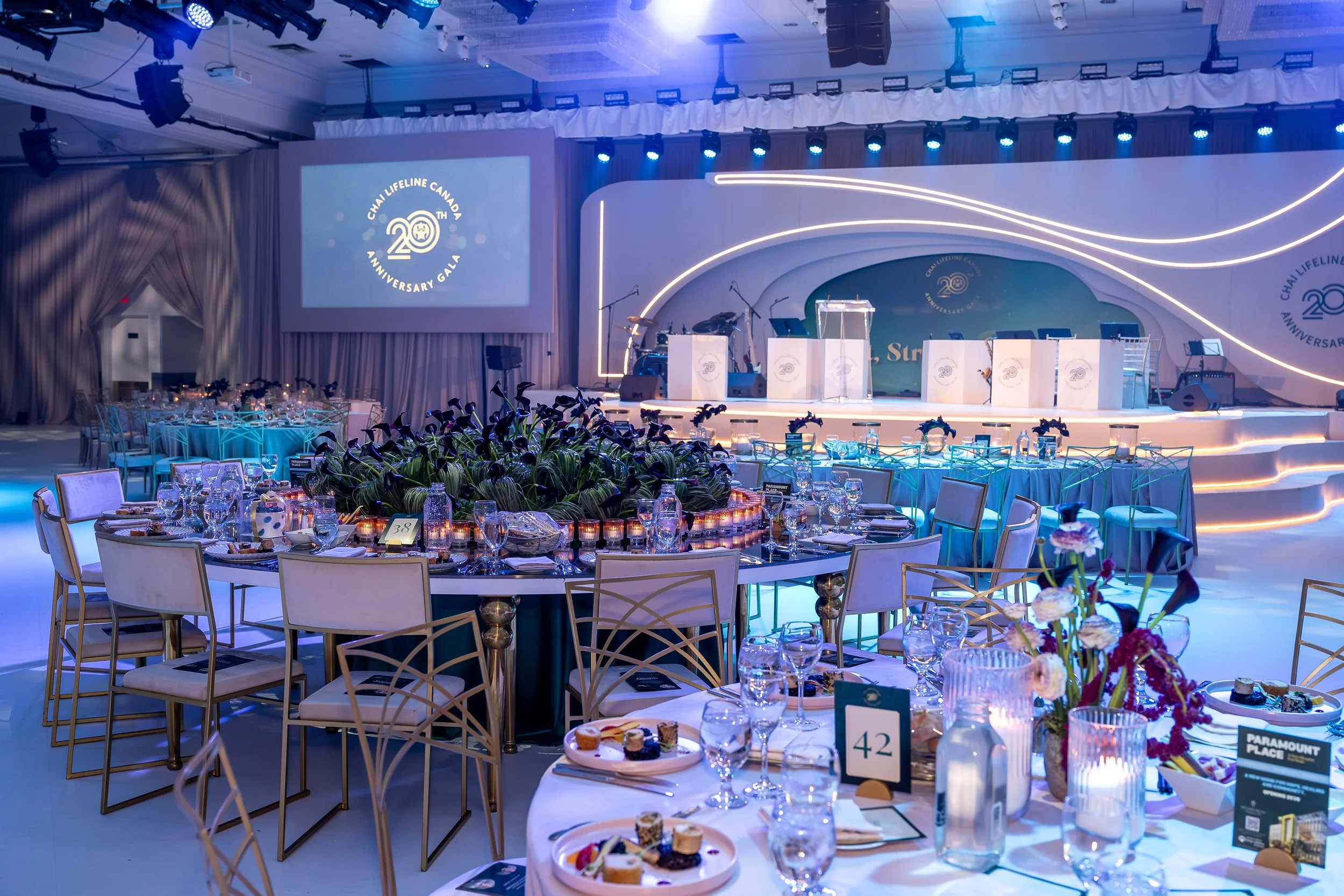
5. Ikebana Influence and Sculptural Stems
Manipulated stems, negative space, asymmetry, grasses used as line rather than filler. The Japanese ikebana influence appeared in the 2026 forecasts and has carried straight into 2027, which makes it one of the more durable ideas on this list.
For us this is the most technically demanding trend of the year. A sculptural arrangement has nowhere to hide — every stem is visible and intentional, so the mechanics have to be invisible and the material has to be flawless.
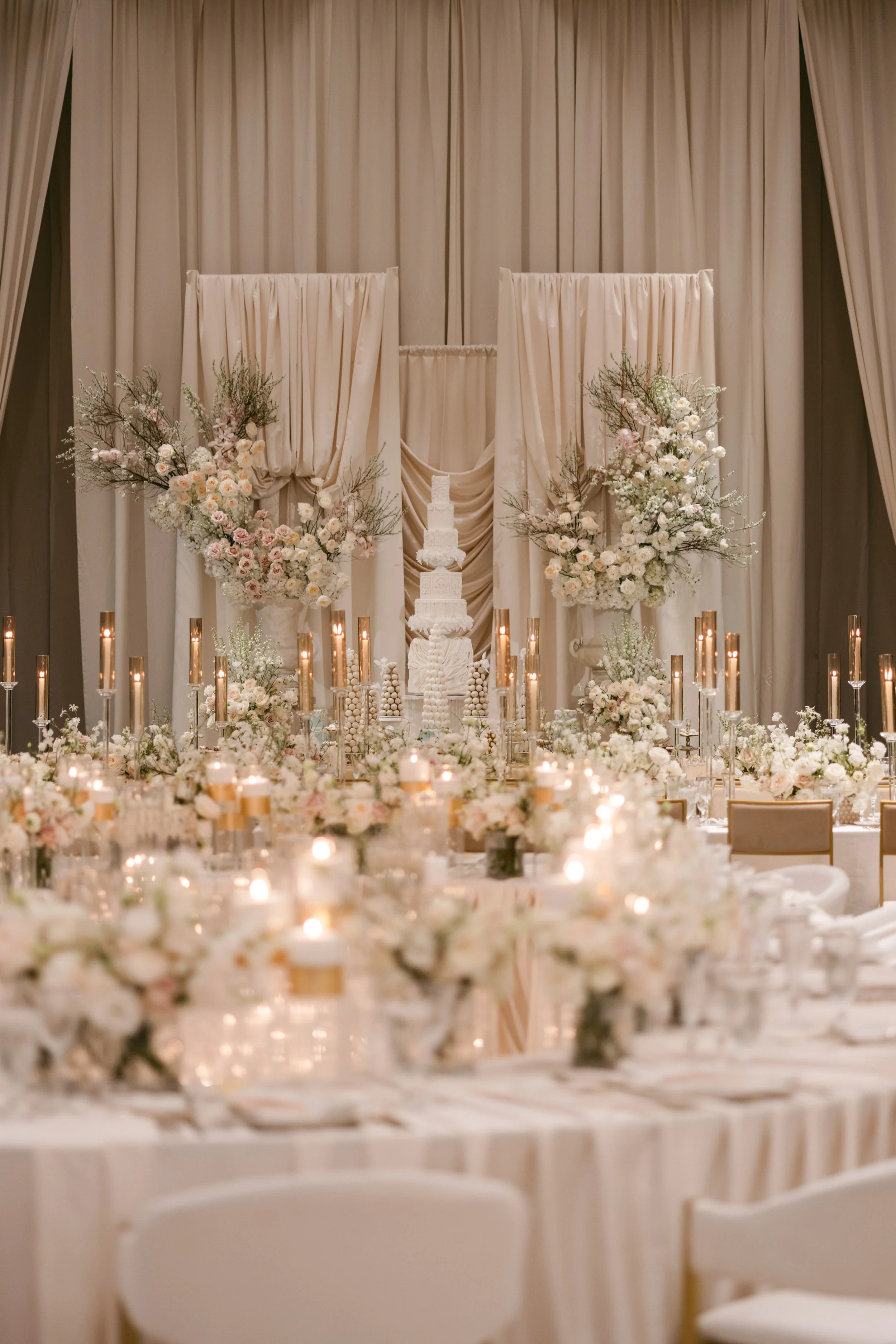
6. Drapery Returns
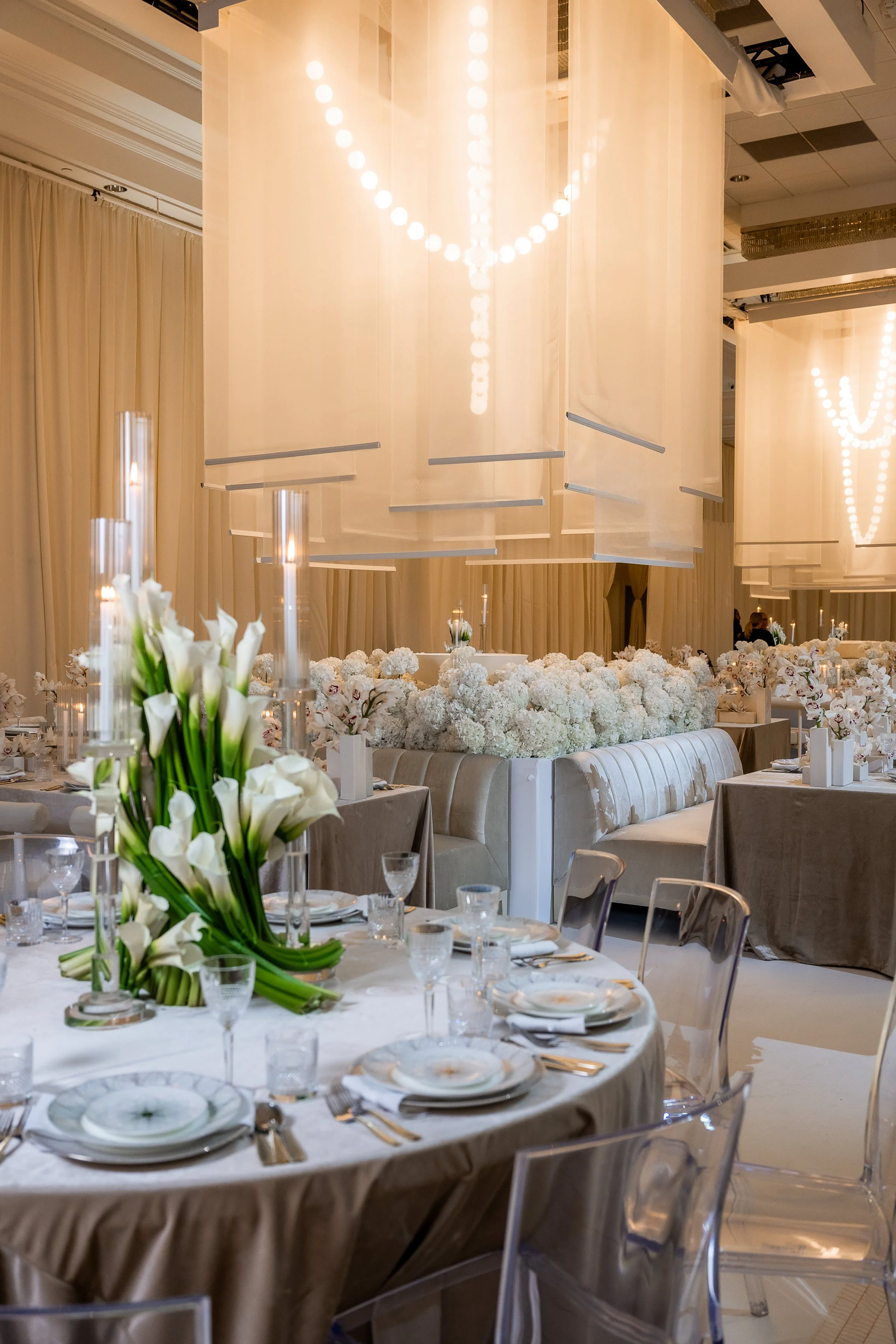
Fabric is back, and not as a budget backdrop. Draped ceilings, billowed walls, ruched and pooling linens, layered sheers that soften hard architecture.
Of everything in this forecast, drapery is the fastest-rising signal we're seeing — and it pairs naturally with the grounded, low-profile floral work above. Where the florals come down, the fabric goes up, and the room still feels enclosed.
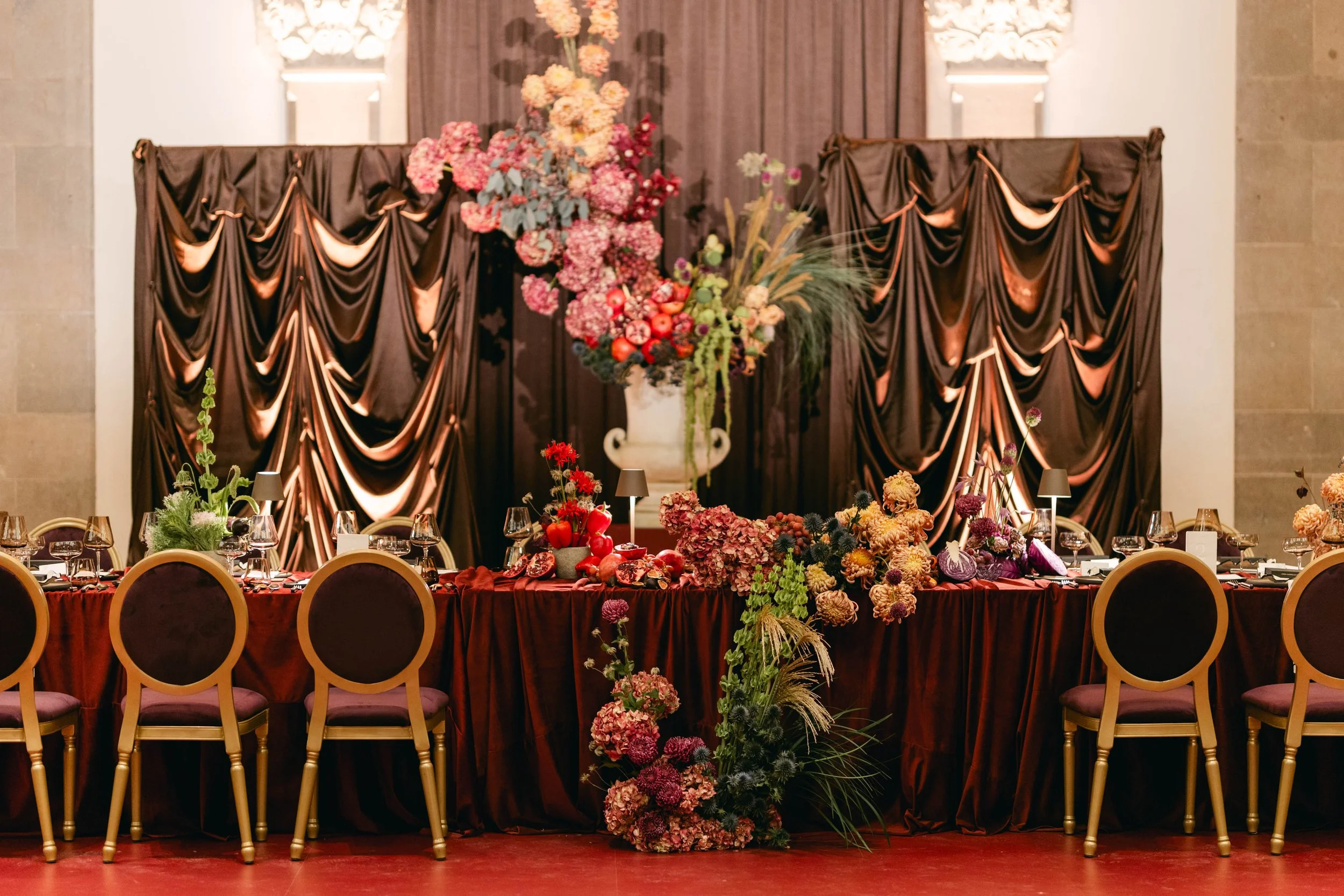
7. Colour: Browns Deepen, Lilac Emerges
2026 belonged to mocha and warm neutrals. 2027 keeps the warmth but takes it deeper:
Rich browns and deep reds continue and intensify — fig, merlot, muted terracotta
Plum with olive is the single fastest-rising palette we're tracking
Lilac and pastel blue begin to appear as soft accents against those darker bases
Opalescent and chrome persist as metallic accents, though there's disagreement in the forecasts about how long
8. Lighting Becomes Its Own Design Layer
The biggest technical change we're planning for. Lighting is no longer "we'll uplight the room" — it's a plan that evolves across the night: bright and clear for the ceremony, warm and low for dinner, saturated for late night.
Specifics we expect to build more of in 2027: concealed architectural lighting that washes a surface without a visible source, table lamps instead of overhead fixtures, Japanese paper lanterns, and clustered candles at varying heights.
Candlelight remains the highest-impact, lowest-cost upgrade in wedding design. Triple the candle count before you add anything else.
What's Leaving in 2027
Pampas grass, in any quantity
Baby's breath clouds
Perfectly round, uniform bouquets
Heavy greenery garlands running the length of every table
Dusty blue as a primary palette
Matching bridesmaid bouquets
Standalone arches in rooms that have better architecture to work with
The Honest Part: "Less Is More" Costs More
Every 2027 forecast points the same direction — restraint, intention, fewer elements. Couples read that and reasonably conclude their décor budget should come down.
At the luxury tier, it goes the other way, and we'd rather say so before the quote than after.
When you fill a room with mixed varieties and layered textures, individual stems disappear into the whole. A bloom that's slightly off-colour or a head that opened two days early is absorbed by everything around it. That tolerance is worth real money.
Strip the design back to one variety and every stem is on display. Uniformity stops being a nice-to-have and becomes the entire effect. That means:
Premium grade only. Single-variety work needs consistent head size, colour and stage of opening across hundreds of stems.
Higher rejection rates. We order significantly more than we install, because anything that doesn't match gets pulled.
More labour per visible stem. Sculptural and integrated work is slower to build and far slower to install on site.
Specific varieties cost more. Garden roses, phalaenopsis, lily of the valley and antique hydrangea are not commodity blooms.
So: fewer elements, higher cost per element. A restrained 2027 design and a maximalist 2026 design can land at the same number — the difference is where the money goes.
That's not a reason to avoid the trend. It's the most beautiful direction the industry has moved in years. It's just a reason to set the budget on what you're building, not on how much of it there appears to be.
Frequently Asked Questions
What is the biggest wedding décor trend for 2027?
Integrated floral installations — florals built into a venue's existing architecture rather than placed in front of it. It replaces the standalone ceremony arch as the defining installation of the year.
Are wedding flowers getting cheaper in 2027?
No. The 2027 move toward fewer, simpler arrangements does not lower cost at the luxury tier. Single-variety and sculptural work requires premium-grade material, higher rejection rates and more labour per visible stem.
What colours are trending for 2027 weddings?
Deep browns and reds — fig, merlot, muted terracotta — with plum and olive as the fastest-rising pairing. Lilac and soft pastel blue are emerging as accent colours against those darker bases.
Is pampas grass still in style for 2027?
No. Pampas grass is consistently listed as finished across 2027 forecasts, along with baby's breath clouds, heavy greenery garlands and dusty blue palettes.
What is a monobloom wedding?
A design built around a single flower variety, used at different scales throughout the event. It reads as confident and intentional, and it is more demanding to execute than a mixed-variety design.
When should I book a designer for a 2027 wedding?
It’s never too late. The earlier you plan to book your designer, the better, so that you are stress-free.
Ethereal Creators is a luxury wedding floral and décor design studio serving Toronto and the GTA.