Wedding Decor Trends 2026: What Luxury Couples Are Choosing
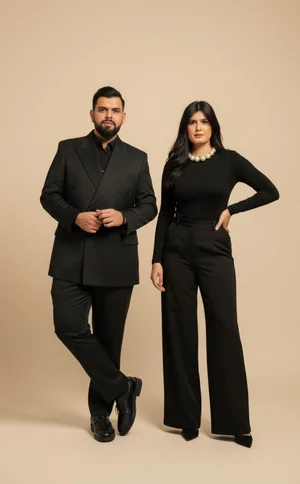
By the design team at Ethereal Creators — luxury event & floral design, Toronto
The most striking thing about 2026 weddings isn't a single color or flower. It's a shift in philosophy. After years of soft, safe, beige celebrations, couples are turning the volume back up — choosing richer palettes, more sculptural florals, more dramatic lighting, and decor that feels collected and crafted rather than copied from a mood board. The industry has a name for it: smart luxury — spending intentionally on fewer, bigger, more personal moments.
We design these weddings for a living, so this isn't a recycled listicle. Below is what we're actually being asked for in our 2026 consultations, why each trend is happening, what it costs at the luxury tier, and — just as importantly — what's quietly being retired.
The defining 2026 wedding decor trends are: rich jewel-tone and chocolate-brown palettes, the return of silver metallics, oversized sculptural floral installations, statement chandeliers and layered lighting, deeply textured "tactile" tablescapes, serpentine tables with pooling linens, foam-free and preserved-flower sustainability, and editorial monofloral arrangements. Fading out: pampas grass, baby's breath, dusty blue and sage palettes, perfectly round bouquets, and flat "white-and-green" minimalism.
That's the snapshot. Here's the depth.
Why 2026 looks different: the "smart luxury" shift
Weddings remain a massive, resilient market. Roughly 2 million U.S. couples married in 2025, contributing to a wedding industry valued at over $100 billion, with U.S. revenue alone around $66 billion. The average wedding cost held steady at about $34,000 (around $292 per guest across 117 guests), according to The Knot's 2026 Real Weddings Study of more than 10,000 couples.
But averages hide the real story at the top of the market. Luxury couples aren't spending more on everything — they're concentrating budget into fewer, higher-impact design moments: one breathtaking floral installation instead of dozens of forgettable centerpieces, one show-stopping lighting feature instead of generic uplighting everywhere. The same intentionality is visible in adjacent choices — lab-grown diamonds now make up 61% of engagement-ring purchases (up 239% since 2020), proof that today's luxury couple prizes meaning and value over conspicuous spend. That mindset is the engine behind every trend below.
The 9 wedding decor trends defining 2026
1. Jewel tones lead — emerald is the color of the year
The biggest palette story of 2026 is the return of saturated, confident color. Emerald green sits at the top of nearly every forecast — a rich, sophisticated jewel tone that pairs beautifully with warm gold and looks extraordinary by candlelight. Sapphire, garnet, and amethyst follow close behind.
Why it's happening: after years of muted neutrals, couples want rooms that feel alive and photograph with drama. Jewel tones read as "expensive" instantly.
How to use it (designer tip): anchor with one jewel tone, then let 70% of the room stay neutral so the color reads as intentional, not overwhelming. Emerald velvet linens + ivory taper candles + gold flatware is a foolproof luxury formula.
2. Chocolate, espresso & moody browns
The breakout neutral of 2026 isn't grey or greige — it's deep brown: chocolate, espresso, mocha, and cocoa. Grounding, warm, and quietly opulent, brown is showing up in linens, bridesmaid palettes, florals (think toffee roses and copper-toned blooms), and stationery.
Why it's happening: it delivers the moody sophistication couples want without the harshness of black, and it flatters warm metals, wood, and candlelight.
3. Silver metallics make a comeback
After a decade of gold and rose gold, silver is the metallic moment of 2026 — cooler, more modern, and a little futuristic. Mercury glass, brushed-silver candlesticks, chrome accents, and silver-rimmed glassware are replacing warm metals at the high end.
Designer tip: silver + emerald or silver + icy blue feels fresh and contemporary; silver + chocolate brown is the unexpected pairing we're loving for winter 2026.
4. Oversized, immersive floral installations
Florals are getting bigger, more sculptural, and more architectural — suspended ceiling clouds, floral-wrapped structures, free-standing arches that frame the couple, and installations that enhance a venue's natural bones rather than mask them. This is where luxury budgets are concentrating.
Why it's happening: one immersive installation does more for a guest's experience (and the photos) than scattered small arrangements. It's the "fewer, bigger moments" philosophy made literal.
This is our specialty at Ethereal Creators — architectural structural elements married to couture florals is the core of how we design. (See our portfolio of luxury floral installations and wedding design services.)
5. Statement chandeliers & layered lighting
Lighting has graduated from afterthought to headline design element. The statement chandelier — often custom, sometimes floral-wrapped, occasionally floating untethered above the dance floor — is the visual anchor of the 2026 reception. Around it, designers are layering light: warm uplighting, hanging lantern clusters, oversized pendants, pin-spots on centerpieces, and always, always candlelight.
Why it's happening: layered lighting creates the depth, warmth, and intimacy that flat overhead lighting kills. Crystal chandeliers are back too — but with restraint and geometric, modern composition rather than fussy ornamentation.
6. Texture is the new "color"
2026 is obsessed with tactility. Raw clay vessels, matte ceramics, hand-thrown pottery, linen and slubbed-cotton tablecloths, fluted glass, textured candles, and layered fabrics give tablescapes a collected, artisanal feel. The look is crafted, not catalog.
Designer tip: mix at least three textures per table — a matte, a sheen, and a natural fiber — to make even an all-white tablescape feel rich and editorial.
7. Serpentine tables & pooling linens
The straight banquet table is giving way to serpentine (S-curve) and organic table layouts, dressed in oversized linens that drape and pool elegantly on the floor. Sculptural candleholders, low-and-lush florals running the length, and mixed seating complete the look.
Why it's happening: curves feel intimate and modern, encourage conversation, and create the long, dramatic sightlines luxury photographers love.
8. Foam-free, preserved & eco-conscious design
Sustainability has moved from "nice to have" to a core design value for 2026 couples. The clearest signal: the industry's move away from floral foam toward chicken wire, moss, and water-based mechanics. Designers are blending fresh blooms with preserved and dried elements — preserved eucalyptus, bleached lunaria, freeze-dried roses, ornamental grasses — not as a budget compromise but as a genuine aesthetic, often kept as a keepsake afterward. Locally sourced, seasonal flowers and reusable/rented hard decor round it out.
Why it's happening: it aligns with couples' values and delivers texture, longevity, and a keepsake — a rare win-win-win.
9. Editorial monofloral & "perfect imperfection" arrangements
At the high end, less can be more: monofloral (one flower, done lavishly — a sea of roses, a cloud of orchids) and monochromatic arrangements feel editorial and intentional. Within them, the styling philosophy is "perfect imperfection" — loose, free-form, asymmetric arrangements with intentional movement and negative space, rather than tight, perfectly spherical bouquets.
What's fading in 2026 (the honest "what's out" list)
Trends earn their luxury status partly by contrast. These are cooling off — drop them and your wedding instantly reads more current:
Pampas grass — oversaturated; the defining cliché of the boho era.
Baby's breath as a primary flower — peaked; now reads as filler, not feature.
Heavy greenery table runners — replaced by cleaner lines and sculptural low florals.
Perfectly round, tight bouquets — giving way to free-form, asymmetric shapes.
Dusty blue & sage green palettes — the 2023–2024 default; cooling toward warm earth tones, mocha, and terracotta.
Blush pink everything — warming up into terracotta rose and antique pink.
Flat "white-and-green" minimalism — still elegant, but on its own it now reads as safe rather than designed.
A caveat from our studio: "out" doesn't mean forbidden. A single nod to a fading element, used deliberately, can still be beautiful. The mistake is building an entire 2026 wedding on a palette that peaked three years ago.
Step-by-step: how to apply 2026 trends to your wedding
Lead with one palette decision. Choose your dominant color story first (e.g., emerald + gold, or chocolate + silver). Everything else hangs off this.
Pick your one big moment. Decide where the budget concentrates — ceremony installation, suspended floral, or statement chandelier. Fund it properly.
Layer your lighting plan early. Lighting is structural; design it alongside florals, not after. Map uplighting, a feature fixture, and candle density per table.
Build texture into the tablescape. Specify linen, ceramic/glass, and candle textures deliberately — three minimum per table.
Choose your table architecture. Serpentine, long banquets, or rounds — this drives florals, linens, and floor plan.
Make a sustainability choice. Foam-free mechanics, preserved accents, rented hard decor, seasonal/local blooms.
Edit out the dated. Cross-check against the "what's fading" list and cut anything that peaked pre-2025.
Pressure-test cohesion. Every element should ladder back to one or two core ideas. If it doesn't, remove it.
What luxury wedding decor costs in 2026 (budget guide)
Decor and florals typically command 15–20% of a total wedding budget, and more at the luxury tier where design is the experience. Rough planning ranges we see in major markets like Toronto:
Elevated: $25,000–$35,000 — strong florals, good lighting, one feature moment.
Luxury: $45,000–$60,000 — immersive installation(s), custom lighting, full tablescape design, draping.
Ultra-luxury: $65,000+ — multiple large-scale installations, custom-fabricated structures, complete venue transformation.
Designer tip: protect the impact of your spend by concentrating it. A single $20,000 installation guests walk through outperforms $20,000 spread across forgettable details.
Common mistakes couples make with 2026 trends
Chasing every trend at once. Pick a lane. Cohesion reads as luxury; a checklist of trends reads as chaos.
Treating lighting as an add-on. Under-lit florals and flat overhead light undo expensive decor.
Over-ordering small centerpieces. Money disappears into details no one remembers. Consolidate.
Copying a viral photo literally. It was designed for a different room, light, and palette. Adapt, don't clone.
Ignoring the venue's bones. 2026 design enhances a space; fighting the architecture wastes budget.
Forgetting scale. Trends like sculptural florals and chandeliers only work when they're genuinely oversized.
Expert tips from our design studio
The 70/30 rule: keep ~70% of the room neutral so your 30% of bold color and texture lands as intentional.
Design for the entrance and the dance floor first — the two moments guests photograph and remember most.
Candlelight is the cheapest luxury upgrade there is. Triple your candle count before you add anything else.
Rent the architecture, invest in the florals. Structures can be reused; the floral artistry is what makes it yours.
Book design partners 9–12 months out for 2026 peak dates; the best installation teams fill early.
Mini case study: concentrating budget for maximum impact
A common scenario in our consultations: a couple arrives with a budget spread thin across 24 small centerpieces, basic uplighting, and a modest arch. We reallocate — collapsing the centerpieces into a few dramatic low-and-lush runners, redirecting the savings into one suspended floral installation over the head table and a custom chandelier above the dance floor. Same total spend, transformed result: guests now walk into a designed environment rather than past scattered arrangements, and the photography has a hero shot. This "fewer, bigger moments" reallocation is the single highest-leverage move in luxury wedding design for 2026.
Frequently asked questions
What are the biggest wedding decor trends for 2026?
The leading 2026 wedding decor trends are jewel-tone and chocolate-brown palettes, the return of silver metallics, oversized sculptural floral installations, statement chandeliers with layered lighting, deeply textured tablescapes, serpentine tables with pooling linens, foam-free and preserved-flower sustainability, and editorial monofloral arrangements.
2. What wedding colors are trending in 2026?
Emerald green leads as the color of the year, followed by other jewel tones (sapphire, garnet, amethyst), rich chocolate and espresso browns, and cool silver metallics. Warm earth tones like terracotta and antique pink are replacing the dusty blue and blush palettes of recent years.
3. What wedding trends are going out of style in 2026?
Pampas grass, baby's breath as a primary flower, heavy greenery table runners, perfectly round tight bouquets, dusty blue and sage green palettes, all-blush schemes, and flat "white-and-green" minimalism are all fading in 2026.
4. How much does luxury wedding decor cost in 2026?
Decor and florals typically take 15–20% of a wedding budget. At the luxury tier, expect roughly $25,000–$60,000 for immersive installations, custom lighting, and full tablescape design, with ultra-luxury transformations starting around $60,000+.
5. Are floral installations worth it?
For luxury weddings, yes — a single immersive installation typically delivers more guest impact and stronger photography than the same budget spread across many small centerpieces, which is why "fewer, bigger moments" defines 2026 design.
6. Is silver or gold more on-trend for 2026?
Silver is the metallic moment of 2026, offering a cooler, more modern look after years of gold dominance — though warm metals still work beautifully with chocolate-brown and earth-tone palettes.
7. What are sustainable wedding decor options for 2026?
Foam-free floral mechanics (chicken wire, moss, water-based foam alternatives), preserved and dried florals kept as keepsakes, locally sourced seasonal blooms, and reusable or rented hard decor and structures.
Your 2026 decor action plan (checklist)
Lock one dominant palette (e.g., emerald + gold or chocolate + silver)
Identify your single biggest design moment and fund it
Build a layered lighting plan (feature fixture + uplighting + candlelight)
Specify three textures per table, minimum
Choose table architecture (serpentine/banquet/round)
Make one sustainability commitment (foam-free, preserved, or rented)
Audit against the "what's fading" list and cut dated elements
Confirm cohesion — every element ladders to your core idea
Book your design partner 9–12 months ahead
2026 is the year weddings got their confidence back — richer, moodier, more textured, more personal, and unapologetically designed. The throughline isn't any single flower or hue; it's intention: spending on fewer, bolder, more meaningful moments and editing out everything that feels dated or default. Get the palette, the one big installation, and the lighting right, and the rest falls into place.
Planning a luxury wedding in Toronto or the GTA? Ethereal Creators designs immersive, architecturally-driven celebrations with couture florals and custom installations.